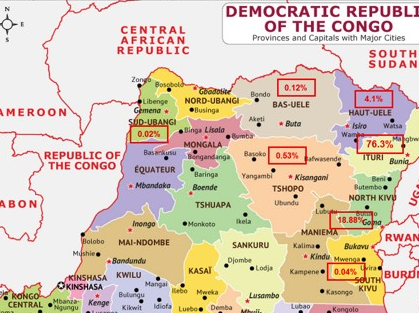
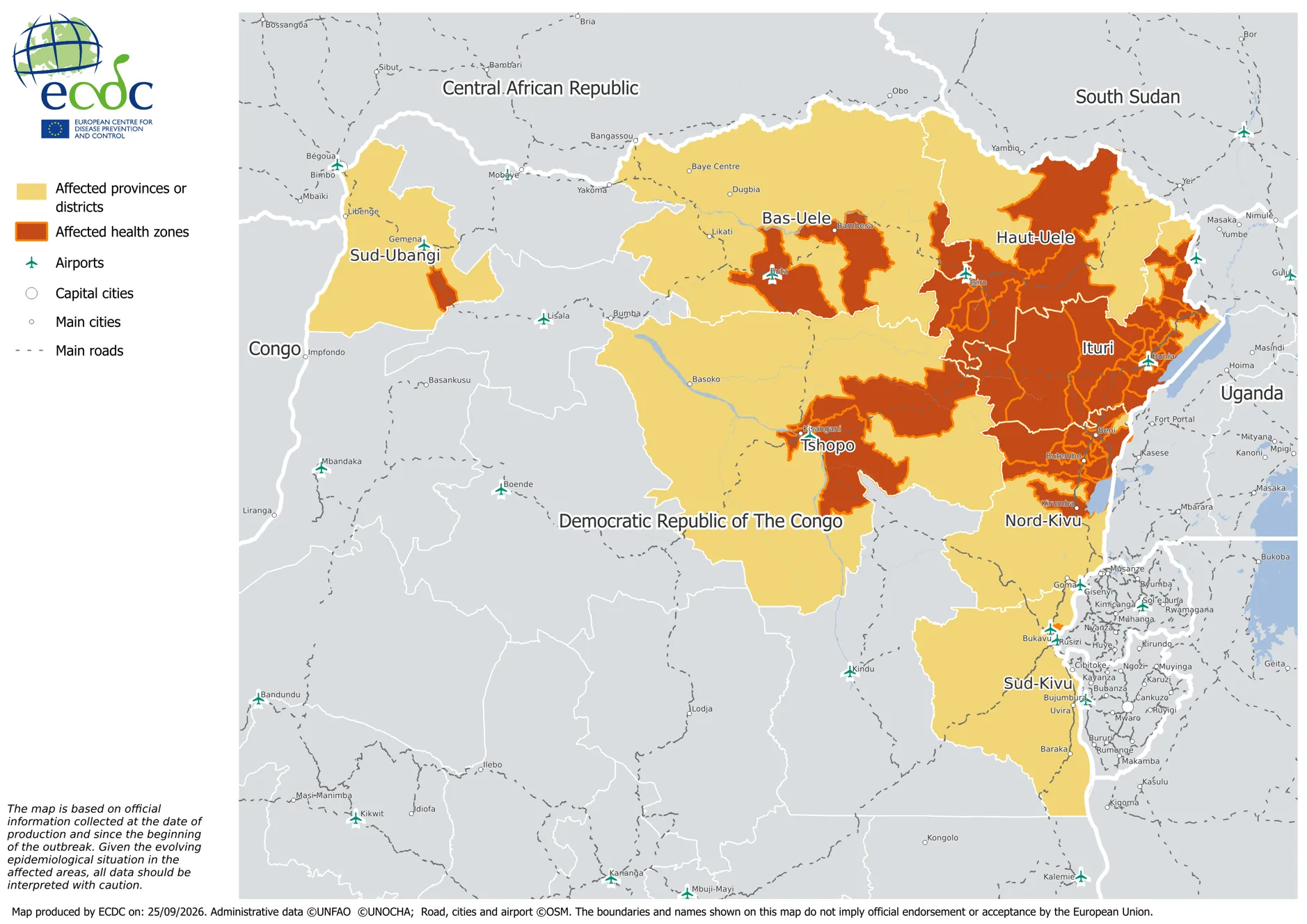
In recent weeks, two Ebola cases have been confirmed in Sud-Ubangi province, including a young man who had traveled extensively after leaving South Kivu on July 10, passing through Ituri, Tshopo, Mongala, and Sud-Ubangi provinces before his death. As part of the public health response, authorities identified and stopped a boat that had carried the infected traveler. The boat was quarantined near Businga, and passengers were placed under observation for 21 days while health officials monitored for signs of illness. During the quarantine period, several passengers developed symptoms that resembled Ebola. At least four individuals were tested, but all laboratory results came back negative. No additional Ebola cases were identified among the passengers or their contacts during the 21-day observation period.

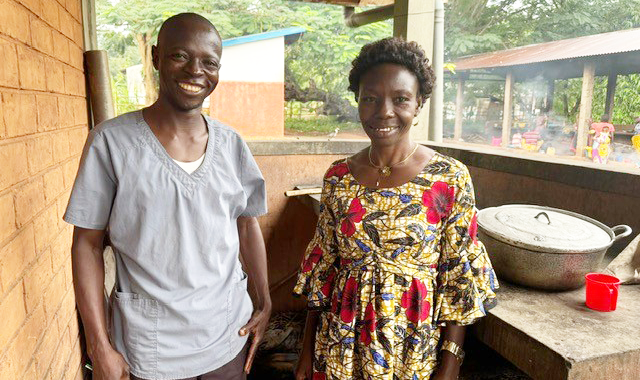
“We are happy about this,” reported CEUM’s Dr. Célestin Deambi, who is helping coordinate the province’s Ebola preparedness efforts. “But this does not mean that we should let our guard down. It is absolutely necessary to continue to strengthen awareness and epidemiological surveillance at all levels in our Province.”
After completing the full observation period and receiving negative test results, the travelers were released, and the boat safely continued its journey to Businga.
While the immediate concern has passed, the situation highlighted the importance of strong disease surveillance and rapid response systems. Health workers throughout the province are continuing awareness campaigns and monitoring efforts to ensure any future cases are identified quickly.
The response has also led to significant investments in preparedness. A team of twelve public health experts from the WHO (World Health Organization), PNHF (National Border Hygiene Program), and INSP (National Institute of Public Health) recently arrived in the region to train nurses, laboratory technicians, and physicians in Ebola virus detection and response. The team delivered six tons of medical equipment, supplies, medications, and a mobile laboratory. “The team will work with us for at least three weeks before returning to Kinshasa,” reports Dr. Deambi, “Our goal is to improve the province’s level of preparedness for the Ebola epidemic.”
One of the most significant developments is that samples can now be analyzed locally in Gbadolite rather than being sent hundreds of miles away to Kinshasa. This capability will dramatically reduce the time needed to confirm or rule out suspected cases and strengthen the province’s ability to respond to potential outbreaks.
Health officials are also working across national borders. Regular surveillance meetings are being organized between the Democratic Republic of Congo and neighboring provinces in the Central African Republic to coordinate monitoring efforts and share information about potential health threats.
“We bless God for these results and thank you for your prayers,” Dr. Célestin shared. “I am reassured of our ability to deal with this epidemic if a case is recorded. We are doing everything we can to be better organized and prepared.”
CEUM medical leaders are taking these preparedness efforts seriously because the broader outbreak in the Democratic Republic of Congo continues to grow. According to recent reports, the country’s Ebola outbreak has confirmed over 8,000 cases and 3,901 deaths reported since mid-May, representing a case-fatality rate (CFR) of approximately 48%. Public health experts describe it as the second-largest Ebola outbreak in history and the fastest-growing outbreak ever recorded. These sobering realities underscore the importance of the training, surveillance, laboratory capacity, and cross-border coordination now being established in regions like North Ubangi before cases arrive.
As CEUM medical teams continue to strengthen preparedness and response systems, we invite you to pray for healthcare workers, government officials, and communities across DR Congo who remain vigilant against the threat of Ebola.
Please join us in prayer:
- Pray for continued protection from Ebola.
Give thanks that all suspected cases tested negative, and pray that no new cases of Ebola have been detected. Ask God to protect families and communities from the spread of disease.
- Pray for healthcare workers and public health teams.
Ask God to strengthen Dr. Deambi, CEUM medical staff, nurses, laboratory technicians, and doctors as they remain vigilant and prepare to respond to potential cases.
- Pray for effective training and preparedness efforts.
Pray that the newly delivered equipment, mobile laboratory, and ongoing training programs will equip healthcare teams to identify and respond quickly to any health threats that arise.
- Pray for wisdom and cooperation among leaders.
Ask God to guide local, provincial, and cross-border health officials as they coordinate surveillance efforts, share information, and work together to protect vulnerable communities throughout the region.
The European Center for Disease Control and Prevention (ECDC) updates their website weekly with Ebola outbreak news and data: https://www.ecdc.europa.eu/en/ebola-outbreak-democratic-republic-congo-and-uganda